

How an Outdoor Lighting Company Makes a Coastal Yard Look Its Best After Sunset
There's a moment just after the sun drops below the horizon on the Outer Banks when the sky goes from gold to ink, and a coastal yard either comes alive or disappears. The difference isn't luck. It's light. Working with an outdoor lighting company that understands coastal environments means knowing exactly where to place fixtures, which materials survive salt air, and how layered light turns a yard into something worth staying outside for long after dark.
There's a moment just after the sun drops below the horizon on the Outer Banks when the sky goes from gold to ink, and a coastal yard either comes alive or disappears. The difference isn't luck. It's light. Working with an outdoor lighting company that understands coastal environments means knowing exactly where to place fixtures, which materials survive salt air, and how layered light turns a yard into something worth staying outside for long after dark.
What Makes Coastal Lighting Different
A yard in Barco, NC faces conditions that most inland properties never see. Salt air accelerates corrosion. Humidity affects fixture performance. Wind exposure along the water means cables, connections, and mounting hardware take a beating year-round.
As an experienced outdoor lighting company, Evolve Design Build, LLC accounts for all of it from the start, specifying marine-grade brass and stainless steel fixtures rated for coastal environments and running weatherproof conduit before a single plant goes into the ground.
The aesthetic stakes are different here, too. Coastal yards tend to be open, layered, and visually complex,a pool at the center, a pergola nearby, native grasses catching the breeze, a view worth preserving.
Lighting a space like this requires a deliberate plan, not a row of path lights and a floodlight on the house.
Layering Light the Right Way
The outdoor lighting company approach that works best in coastal yards treats light as a design layer, not an afterthought. That means thinking in three zones: the structural layer, the landscape layer, and the accent layer.
The structural layer covers the features guests interact with most directly, including patio edges, steps, pergola beams, and pool surrounds. Low-voltage step lights and in-ground well lights keep these areas safe without washing out the atmosphere. Along a pool, underwater LED fixtures create a glow that makes the water look like it belongs in a magazine spread.
The landscape layer is where coastal character shows up most. Uplighting a mature live oak or a cluster of ornamental grasses just outside the patio edge creates a frame around the space. Downlighting from the pergola throws soft shadows across the paver surface the way natural light never quite does. These aren't accent features. They're the reason the yard still feels intentional after the sun goes down.
The accent layer is the detail work. The path through the side yard, the fire pit circle, the kitchen counter edge. Small, focused fixtures at key transitions guide movement through the space and keep sightlines open to whatever view exists beyond the yard line.
Fixture Placement That Protects the View
One of the most common mistakes in coastal outdoor lighting is overlighting. A fixture aimed directly at the water or dune line creates glare that wipes out the view that makes the yard worth having.
The better approach is to light inward and downward, keeping the perimeter dark so the natural backdrop stays intact. Smart outdoor lighting companies use shields, beam spreaders, and careful aiming angles to keep the yard glowing without competing with the landscape beyond it.
Let Evolve Design Build Light Your Coastal Property Right
Evolve Design Build LLC designs complete outdoor spaces in Barco, NC and across the Currituck County coast, including outdoor lighting that's built to perform in a salt-air environment and designed to make every hour outside worth having.
When your yard goes dark, it should look better than it did at noon.Contact Evolve Design Build LLC to get started on an outdoor lighting plan for your coastal property.

From Muddy Backyard to Masterpiece: Inside Our Work As a Concrete Pool Contractor
Your Barco, NC, backyard has potential you probably haven't fully seen yet. When you bring in a skilled concrete pool contractor, that potential gets mapped, measured, and built into something that fits your property, your climate, and the way your family actually uses outdoor space.
Here's exactly what our team does, and what you experience along the way.
Your Barco, NC, backyard has potential you probably haven't fully seen yet. When you bring in a skilled concrete pool contractor, that potential gets mapped, measured, and built into something that fits your property, your climate, and the way your family actually uses outdoor space.
Here's exactly what our team does, and what you experience along the way.
It Starts With a Real Conversation
Before a single measurement is taken, our experts sit down with you. Not to show you a catalog of pre-built options, but to understand what you want your backyard to do for you.
Do you want a lap pool for serious swimming? A resort-style design with a connected spa and sunken lounge? A family-friendly shallow entry with room to grow? These details shape every decision that follows.
This conversation also surfaces the practical realities of your property, including grade changes, drainage patterns, soil conditions, and sun exposure. Our team reads your land and factors it into the design so the finished pool works with your yard rather than against it.
Design That Goes Beyond a Sketch
Once our specialists understand your goals, we move into the design phase. Concrete pools give our team more freedom than any other material. Because concrete is fully customizable, we aren't working from a fixed mold or a limited set of shapes. Your pool takes the exact form that fits your space.
Our designers produce detailed plans that account for pool depth, interior finish options, coping material, deck integration, and water features like spillways or bubblers.
You see the full picture before construction begins, which means there are no surprises once equipment arrives on site.
Breaking Ground: What the Build Actually Looks Like
Once permits are in hand and the design is locked in, excavation begins. Our crew digs to precise specifications based on the engineering drawings. After excavation, steel rebar is installed in a grid pattern throughout the shell. This reinforcement gives the structure its strength and is one reason concrete pools outlast other pool types by decades.
After the steel is inspected, our team shoots gunite or shotcrete, a dry or wet concrete mix applied under pressure, across the rebar framework. This forms the shell of your pool. The process takes a single day for most residential pools, and the result is a monolithic concrete structure uniquely fitted to your yard.
Curing follows. Concrete needs time to reach full strength, and our specialists monitor the process to make sure conditions are right. Rushing this stage compromises the finished product, and our team never does.
Finishing the Pool and Connecting It to the Rest of Your Yard
Once the shell cures, finish work begins. Interior plaster, pebble aggregate, or tile gets applied to the pool surface. Coping is set at the pool's edge. Decking is poured or laid depending on the material you've selected.
Plumbing, filtration, lighting, and any automation systems are installed by our team at this stage. Our specialists walk you through how the equipment operates so you understand exactly what you own.
The final step is integrating the pool into the broader landscape. Our team connects the water feature to the surrounding design, whether that includes a pergola overhead, outdoor lighting along the deck, or plantings that frame the pool and tie the space together.
A Finished Space Worth Coming Home To
When the job is complete, you get a concrete pool built to the exact dimensions, depth, and finish you approved, sitting inside a backyard designed for the life you actually want to live in it.
Our team at Evolve Design Build handles every phase of this process in Barco, NC, and the surrounding coastal region. Ready to start? Contact us today.

How Our Retaining Wall Contractor Solves Drainage Problems Before They Damage Your Patio or Pool Area
When you hire a retaining wall contractor, you’re trusting a team to manage more than soil. You are trusting specialists to understand how water moves across your property, how grade changes affect nearby hardscapes, and how hidden pressure behind a wall impacts your patio, pool deck, planting beds, and outdoor living areas.
Our team at Evolve Design + Build designs and builds retaining walls that control elevation changes, direct water properly, and support the way you use your property every day.
When you hire a retaining wall contractor, you’re trusting a team to manage more than soil. You are trusting specialists to understand how water moves across your property, how grade changes affect nearby hardscapes, and how hidden pressure behind a wall impacts your patio, pool deck, planting beds, and outdoor living areas.
Our team at Evolve Design + Build designs and builds retaining walls that control elevation changes, direct water properly, and support the way you use your property every day.
Drainage issues often show up long before a wall fails. You may notice mulch washing out after storms, standing water near the edge of a patio, soft spots around a pool area, erosion along a slope, or soil collecting where it does not belong. These problems point to one common issue: water lacks a clear path away from your outdoor living space.
A retaining wall changes the way your yard holds and releases water. When that wall sits near a patio, pool area, pavilion, outdoor kitchen, or walkway, drainage planning becomes one of the most important parts of the build.
Why Drainage Matters Behind a Retaining Wall
Soil holds water after rain. As that water builds up behind a retaining wall, it creates hydrostatic pressure. That pressure pushes against the wall from the back side. Without proper drainage, the wall takes on stress it was never meant to hold.
Our specialists evaluate slope, soil type, runoff direction, roof drainage, pool deck pitch, nearby planting areas, and existing hardscape elevations before construction begins. This gives your project a clear drainage strategy instead of a wall that only addresses the visible grade change.
A retaining wall near a patio or pool area often needs more than one drainage element. Gravel backfill, drain pipe, weep points, outlet locations, and surface grading all work together to move water away from the wall and surrounding surfaces.
How Our Team Reads Your Property Before Building
Every property has its own drainage behavior. In Barco, Currituck County, Moyock, Chesapeake, and nearby communities, flat areas, coastal conditions, heavy rain, and changing soil conditions all influence how water moves.
Our team studies where water enters the space, where it slows down, and where it needs to exit. We look at the existing grade around your patio or pool area and identify low spots that collect water. We also review how nearby structures affect runoff, including your home, rooflines, downspouts, pool coping, walkways, driveways, and landscape beds.
This site evaluation shapes the wall design. Wall height, placement, base preparation, drainage stone depth, pipe location, and final grading all come from what your property needs.
What Goes Into a Drainage-Focused Wall Build
A properly planned retaining wall starts below the surface. Our crew prepares a stable base, sets the correct wall alignment, and builds with the correct drainage path behind the wall. Clean stone behind the wall gives water room to move instead of trapping it in dense soil.
A perforated drain pipe often sits behind the lower portion of the wall. This pipe collects water and moves it toward a proper discharge point. The outlet location matters. Water needs to exit in a place that does not create a new problem near your patio, pool, foundation, fence, or neighboring area.
Surface grading matters just as much. The ground above and around the wall needs to guide water toward the intended drainage path. Around patios and pool decks, our experts pay close attention to finished elevations so water moves away from gathering areas instead of settling where you walk, sit, cook, or relax.
Protecting Patios and Pool Areas Through Better Water Movement
Patios and pool areas depend on stable support beneath the surface. When water sits too close for too long, it affects base materials, joint sand, bedding layers, soil, and surrounding landscape areas. Over time, poor drainage leads to uneven surfaces, washout, shifting edges, and saturated planting beds.
Our retaining wall planning addresses these issues before installation begins. We design the wall as part of the larger outdoor space, not as an isolated feature. That approach matters when the wall connects to steps, paver patios, pool decking, seating walls, planting areas, lighting, or drainage systems.
Evolve Design + Build’s experience in outdoor living, hardscapes, pools, drainage, and retaining walls gives you one team that understands how each part of the project affects the next. The result is a retaining wall that manages grade, directs water, and fits naturally into your property.
A Clear Build Process With a Team That Knows the Details
When you work with our team, you get a detailed review of your site, a design plan based on your property’s conditions, and a build process led by experienced outdoor living professionals. We discuss the role of the wall, the drainage path, the surrounding hardscape, and the finished look of the space before construction begins.
Our experts install retaining walls with the hidden details in mind because those details determine how the wall performs after heavy rain. The base, backfill, pipe, grading, and discharge point all matter.
A well-built retaining wall does more than hold soil in place. It directs water, supports the layout of your outdoor living space, and gives your patio or pool area the drainage planning it needs from the beginning.
How a Water Feature Contractor Adds Sound and Movement to a Coastal Landscape That Already Has Both
The coast provides its own soundtrack. The wind through the sea oats. The distant surf. The afternoon rain on the roof. But the backyard, despite sitting minutes from the ocean, can feel surprisingly quiet and still. The patio is a static surface. The plantings are visual but silent. And the outdoor living space, which looks complete, is missing the element that gives a garden its pulse.
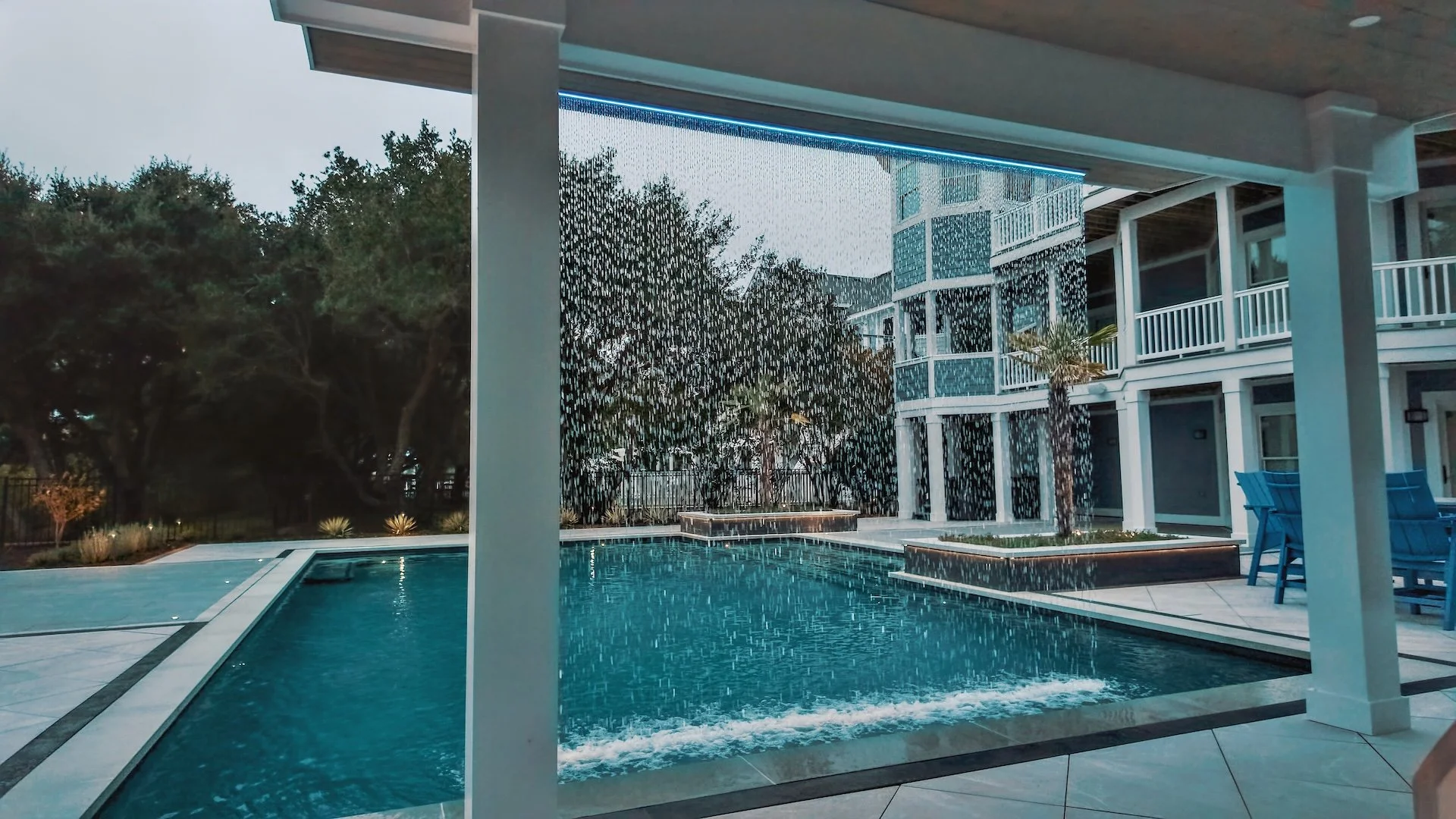
A water feature contractor in Barco, NC adds that element. The sound of water moving over stone. The shimmer of light on a surface that is never the same from one moment to the next. The sense of movement in a landscape that would otherwise be still. A well designed water feature transforms the experience of the outdoor space in a way that no hardscape element or planting can replicate.
The coast provides its own soundtrack. The wind through the sea oats. The distant surf. The afternoon rain on the roof. But the backyard, despite sitting minutes from the ocean, can feel surprisingly quiet and still. The patio is a static surface. The plantings are visual but silent. And the outdoor living space, which looks complete, is missing the element that gives a garden its pulse.
A water feature contractor in Barco, NC, adds that element. The sound of water moving over stone. The shimmer of light on a surface that is never the same from one moment to the next. The sense of movement in a landscape that would otherwise be still. A well designed water feature transforms the experience of the outdoor space in a way that no hardscape element or planting can replicate.
What a Water Feature Contractor Should Design For on the Coast
A water feature on a coastal property faces conditions that inland features do not. The salt air. The wind that accelerates evaporation and carries spray beyond the intended basin. The sandy soil that drains fast and complicates the liner and the basin engineering. And the storm events that add volume to the system faster than the overflow can handle if it was not designed for the climate.
A water feature contractor building for the coast should address:
A recirculating system sized for the wind conditions, because a fountain or a waterfall that loses water to wind drift on an exposed coastal lot will run the basin dry between refills
A liner and basin construction that accounts for the sandy substrate, which shifts more readily than clay and can compromise an improperly supported basin over time
Pump and plumbing materials rated for the salt air environment, because standard components corrode faster on the coast than inland
An overflow system that handles the storm events this region delivers without flooding the surrounding landscape or overwhelming the pump
Placement that positions the water feature where the sound reaches the primary gathering areas, the seating, the patio, and the entry points where the homeowner and the guests will experience it most
These are site specific decisions. A water feature contractor who has built on the coast understands the conditions that shape them.
What Types of Water Features Work on Coastal Properties
The range of water features available includes everything from a simple bubbling boulder to a full waterfall and stream system. The selection depends on the property, the budget, and the effect the homeowner wants to create.
A disappearing fountain, where water emerges from a stone or a vessel and recirculates through a hidden basin, delivers sound and movement with minimal maintenance and a small footprint. A waterfall constructed from natural stone creates a more dramatic focal point and produces a fuller, richer sound. A formal fountain with a visible basin adds a classical or contemporary design element depending on the style. And a stream that connects two areas of the landscape introduces movement along a path rather than concentrating it at a single point.
The Feature That Changes How the Space Feels
The outdoor living space before the water feature is complete. The one after it is alive. The sound fills the gaps the hardscape left. The movement draws the eye. And the homeowner, sitting on the patio in the evening listening to water move over stone, is experiencing the backyard in a way they did not before. If your property in Currituck County, the Outer Banks, or the surrounding area is missing that quality, a water feature contractor is who provides it.
How an Outdoor Kitchen Contractor Designs the Layout Before Choosing a Single Appliance
The homeowner starts with the grill. What brand. How many burners? How much BTU? And before the layout, the counter space, the workflow, or the relationship to the rest of the outdoor space has been discussed, the kitchen is being designed around an appliance rather than around how the family actually cooks and entertains.
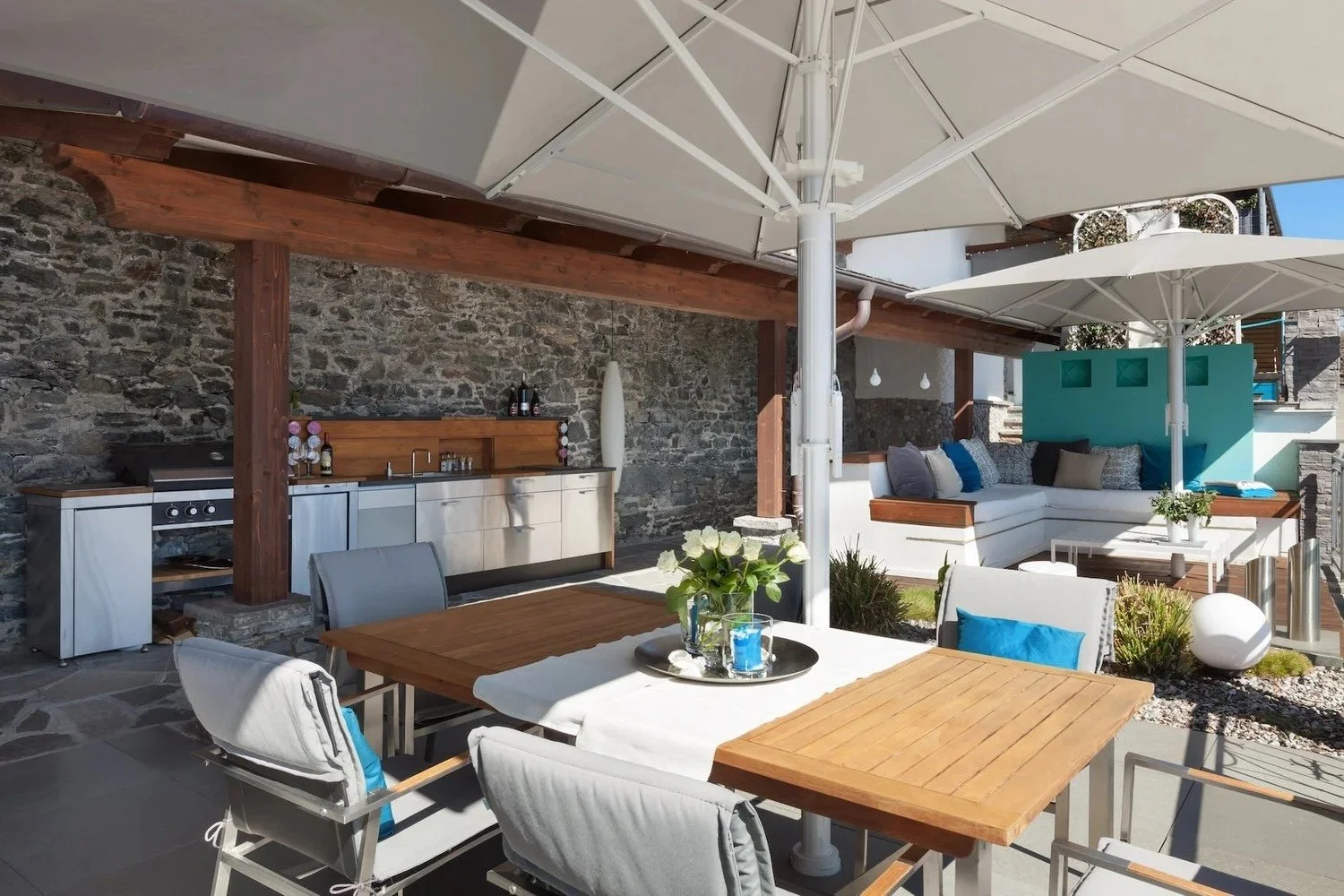
An outdoor kitchen contractor in Barco, NC who leads with the layout rather than the product catalog produces a kitchen that functions. The grill matters. But where it sits, how much counter is beside it, where the sink drains, where the refrigerator opens relative to the traffic flow, and how the cook faces the gathering area while working, those decisions determine whether the kitchen gets used on a Tuesday or only when company comes.
The homeowner starts with the grill. What brand. How many burners? How much BTU? And before the layout, the counter space, the workflow, or the relationship to the rest of the outdoor space has been discussed, the kitchen is being designed around an appliance rather than around how the family actually cooks and entertains.
An outdoor kitchen contractor in Barco, NC, who leads with the layout rather than the product catalog produces a kitchen that functions. The grill matters. But where it sits, how much counter is beside it, where the sink drains, where the refrigerator opens relative to the traffic flow, and how the cook faces the gathering area while working, those decisions determine whether the kitchen gets used on a Tuesday or only when company comes.
On the coast, where the Currituck County and Outer Banks outdoor season runs long and the evening gatherings are the centerpiece of summer living, the outdoor kitchen layout is the foundation of the backyard's social infrastructure.
What the Layout Should Prioritize
The workflow of an outdoor kitchen follows the same logic as an indoor kitchen. The cook moves between the cold storage, the prep surface, the cooking surface, and the serving area. The shorter and more efficient that movement, the better the kitchen functions.
An outdoor kitchen contractor designing for function should prioritize:
Counter space on both sides of the cooking surface, with enough room for prep on one side and plating on the other
The sink positioned between the refrigerator and the grill so rinsing, cleaning, and handwashing happen within the natural workflow rather than requiring a trip to the opposite end of the counter
The refrigerator placed at the end of the island nearest the house or the entertaining area, where guests can access drinks without crossing into the cooking zone
The cook facing the pool, the patio, or the main gathering area so the person preparing the meal stays in the conversation rather than facing a wall or a fence
Adequate clearance behind and beside the cooking surface for the cook to move, for guests to pass, and for the smoke to clear without drifting into the dining area
These are spatial decisions that the outdoor kitchen contractor makes during the design phase. Changing them after the island is built requires demolition, not adjustment.
How the Coastal Climate Shapes the Details
The salt air, the humidity, and the storm exposure on the Outer Banks require materials and connections that inland kitchens do not need. Marine-grade 316 stainless steel for the appliances and the hardware. Polymer or stainless cabinetry instead of wood. Sealed electrical connections with GFCI protection. And plumbing with freeze protection for the occasional hard freezes that reach this area during winter.
The outdoor kitchen contractor who has built on the coast specifies these materials as standard. The one adapting an inland approach discovers the failures after the first season.
The Kitchen the Family Actually Uses
The outdoor kitchen that gets used regularly is the one where the layout works. The cook does not fight the workflow. The guests do not crowd the grill. The drinks are accessible without interrupting the cooking. And the evening flows between cooking, serving, and gathering without anyone needing to go inside. If you are planning an outdoor kitchen in Currituck County, the Outer Banks, or the surrounding area, start with the layout. The appliances follow from the workflow, not the other way around.

Finding the Right Pool Builder in Barco, NC, for Your Backyard
If you are searching for a pool builder in Barco, NC, you are planning more than a place to swim. You want a space that feels private, refined, and connected to your home. Our team designs and builds pools as part of a full outdoor living design, so every element works together from the start.
If you are searching for a pool builder in Barco, NC, you are planning more than a place to swim. You want a space that feels private, refined, and connected to your home. Our team designs and builds pools as part of a full outdoor living design, so every element works together from the start.
A Custom Pool Design Starts With the Property
Every custom pool design begins with a detailed look at the site. We study grade, soil conditions, drainage patterns, and how the home sits on the lot. These factors guide layout decisions and help us position the pool where it will perform well over time.
Sun exposure and wind patterns also shape the design. In many cases, we adjust placement to extend usable hours and improve comfort throughout the day. Sightlines from inside the home matter as well. A pool should feel like a natural extension of the living space, not something placed without context.
Material selection plays a key role in the final result. We guide clients through finishes, coping, and surrounding surfaces so the pool aligns with the home’s architecture. Natural stone, porcelain pavers, and clean concrete finishes are often used to define a luxury backyard pool that feels cohesive and intentional.
Pool and Patio Design That Feels Connected
A well-planned pool and patio design creates structure across the entire yard. Our team organizes the space into clear zones for seating, dining, and movement. This approach helps the area feel balanced and easy to use during both small gatherings and larger events.
Walkways are placed to guide natural flow between the home, pool, and outdoor features. Patio layouts support furniture placement without crowding the space. These decisions are made early so the full environment works together, not in separate pieces.
Our pool construction services often include integrated features that enhance how the space functions. Seating walls, steps, and transitions between elevations are designed to feel clean and purposeful. Outdoor lighting is coordinated during the design phase to highlight key areas and improve visibility after sunset.
Plantings are also part of the plan. We use layered shrubs, ornamental grasses, and trees to create privacy while maintaining an open feel. This helps define the pool area without relying on heavy barriers.
Precision Through Inground Pool Installation
A successful inground pool installation depends on careful coordination from start to finish. Our team manages excavation, structural work, plumbing, and finishing phases so each step aligns with the overall plan.
We account for grading and drainage early in the process. Proper base preparation, water management, and elevation control help support long-term performance. These elements are built into the project from the beginning, even though they are not visible once the pool is complete.
Equipment placement is handled with the same level of detail. We position systems for efficient access while screening them from primary views. This keeps the space clean without affecting serviceability.
By maintaining control over each phase of construction, we deliver a finished product that reflects the original design intent and performs consistently over time.
Built for Daily Use
As a pool builder, our goal is to create spaces that feel natural to use every day. A well-designed pool supports both quiet time and larger gatherings without feeling crowded or disconnected from the home.
We approach each project as part of a complete environment. By aligning design, materials, and construction, we build outdoor spaces that feel calm, organized, and ready to enjoy from the moment they are complete.
For homeowners in Barco, NC, working with an experienced team helps ensure every detail is considered. The result is a pool and surrounding space that fits the property and supports the way you want to live.

How a Pergola Builder Creates Shade That Stands Up to Coastal Conditions in Currituck County, NC
The sun on the Outer Banks is generous. By 10 am in July, it has made the exposed patio uncomfortable. By noon, it has made it unusable. And the homeowner who built the patio, the outdoor kitchen, and the fire pit without planning for overhead shade discovers that the investment works great in the morning and the evening but sits empty during the six hours in between.
A pergola is what solves that problem. It creates filtered or full shade over the gathering space, defines the outdoor room architecturally, and gives the patio a ceiling that supports fans, lights, and speakers. A pergola builder who works on the coast designs the structure to do all of that while surviving the wind loads, the salt exposure, and the UV intensity that coastal North Carolina delivers.
The sun on the Outer Banks is generous. By 10 am in July, it has made the exposed patio uncomfortable. By noon, it has made it unusable. And the homeowner who built the patio, the outdoor kitchen, and the fire pit without planning for overhead shade discovers that the investment works great in the morning and the evening but sits empty during the six hours in between.
A pergola is what solves that problem. It creates filtered or full shade over the gathering space, defines the outdoor room architecturally, and gives the patio a ceiling that supports fans, lights, and speakers. A pergola builder who works on the coast designs the structure to do all of that while surviving the wind loads, the salt exposure, and the UV intensity that coastal North Carolina delivers.
What a Pergola Builder Needs to Account for on the Coast
A pergola inland is a shade structure. A pergola on the coast is an engineered structure that has to handle conditions most inland builds never face.
The build considerations include:
Wind load engineering that meets the coastal building code requirements for Currituck County and the Outer Banks, where design wind speeds are significantly higher than inland jurisdictions
Material selection that resists the corrosion, the UV degradation, and the moisture exposure that the salt air accelerates on every surface
Footing depth and anchoring that prevent uplift during high wind events, because a pergola that is not properly anchored is a liability in a tropical storm
Hardware and fastener specification using stainless steel or hot dipped galvanized connectors that resist the corrosion standard hardware shows within a single season in this environment
Integration with the patio surface and the surrounding landscape so the pergola reads as part of the outdoor living space rather than a structure placed on top of it
These are not overbuilding. They are building to the standard the location demands.
How Material Selection Shapes the Experience
Aluminum pergolas offer the lowest maintenance profile and the strongest resistance to corrosion. They are available in a range of profiles and finishes, including options with adjustable louvers that allow the homeowner to control the amount of light and airflow.
Wood pergolas, particularly pressure-treated or naturally durable species like cedar, deliver a warmth and character that metal structures cannot replicate. The trade-off is a maintenance cycle that includes periodic sealing or staining to protect the wood from the UV and moisture exposure that the coast delivers year-round.
Vinyl and composite materials split the difference, offering low maintenance with a range of aesthetic options. The structural capacity varies by product, and the pergola builder should specify materials rated for the wind loads and the span requirements of the design.
The Room That Has No Walls
A well-built pergola turns the patio from a surface into a space. The shade makes it usable at 2 pm. The fan makes it comfortable in the humidity. The lights extend it into the evening. And the structure gives the outdoor area a sense of enclosure that open-air patios lack. If your patio has been losing the family to the air conditioning every afternoon, a pergola builder in Barco, NC, and surrounding areas who understands the coastal conditions can show you what the right structure would do for the space.

How a Drainage Contractor Solves Water Problems When the Land Is Flat, and Water Has Nowhere to Go
Inland properties have a grade. The water flows downhill, and the drainage contractor's job is to direct it. Coastal properties in Currituck County and the Outer Banks region often have something close to zero grade. The land is flat. The water table sits just below the surface. And after a heavy rain, the water does not flow anywhere. It sits. In the yard. Against the foundation. On the patio. In the planting beds. Everywhere it should not be.
A drainage contractor who works in this environment understands that the solutions look different here. There is no slope to exploit. The discharge options are limited. And the sandy soil that drains quickly on the surface can become saturated at depth when the water table rises during storm season.
Inland properties have a grade. The water flows downhill, and the drainage contractor's job is to direct it. Coastal properties in Currituck County and the Outer Banks region often have something close to zero grade. The land is flat. The water table sits just below the surface. And after a heavy rain, the water does not flow anywhere. It sits. In the yard. Against the foundation. On the patio. In the planting beds. Everywhere it should not be.
A drainage contractor who works in this environment understands that the solutions look different here. There is no slope to exploit. The discharge options are limited. And the sandy soil that drains quickly on the surface can become saturated at depth when the water table rises during storm season.
What a Drainage Contractor Evaluates on a Coastal Property
The first step is understanding where the water is coming from and why it is not leaving. On flat, coastal lots, the answer is usually a combination of surface runoff that has no grade to follow and a water table that rises during wet periods and prevents subsurface drainage from functioning.
A drainage contractor evaluating a coastal property looks at:
The existing grade around the house, the patio, and the landscape features to determine whether the surfaces are directing water toward or away from the structures
The water table depth, which on many properties in this region sits close enough to the surface that traditional French drains cannot discharge effectively during saturated conditions
The soil composition and percolation rate, because sandy soil drains fast on the surface but can become a bathtub when the underlying water table eliminates the path for water to move through
The location of any hardscape, pool equipment, septic systems, or other infrastructure that constrains where drainage solutions can be routed
The discharge point, which on flat lots may require a sump pump, a dry well, or a connection to a stormwater system rather than a simple gravity outlet
These evaluations determine the scope. A surface grading correction is a different project than a French drain network, which is a different project than a pump-assisted system. The right solution depends on the site.
Why Experience on the Coast Matters
A drainage contractor in Barco, NC who learned the trade on properties with grade and clay soil will approach a flat, sandy, high water table lot with assumptions that do not apply. The solutions that work inland, gravity fed pipes to a low point, may not function here when the low point is already saturated.
The contractors who have solved drainage problems on dozens of coastal properties understand the limitations and the workarounds. They know when a sump is required. They know how to design a system that handles the volume without overwhelming the discharge. And they know how to integrate the drainage with the existing landscape so the solution does not create new problems.
The Yard That Stays Dry When It Rains
Water problems on the coast are not going to resolve themselves. The land is flat. The water table is high. And every storm delivers a test. A drainage contractor who understands coastal conditions can walk the property and tell you exactly where the water is going, why it is getting stuck, and what it takes to move it. That conversation is worth having before the next storm arrives.

How an Outdoor Kitchen Contractor Builds for a Climate That Corrodes and Tests Everything
The outdoor kitchen that works beautifully in a sheltered suburban backyard in Raleigh may not survive its third summer on the Outer Banks. The salt air reaches every surface. The humidity sits on every material. The storms drive rain sideways into cabinets, connections, and equipment housings that were never designed for coastal exposure. And the UV at the coast accelerates the fading, the cracking, and the degradation that milder environments take years to produce.
An outdoor kitchen contractor who builds on the coast understands that the material specifications, the appliance selections, the electrical and plumbing decisions, and the structural design all need to be calibrated for conditions that are harsher than anywhere inland. The kitchen that performs here is the one that was built by someone who knew what the coast would do to it.
The outdoor kitchen that works beautifully in a sheltered suburban backyard in Raleigh may not survive its third summer on the Outer Banks. The salt air reaches every surface. The humidity sits on every material. The storms drive rain sideways into cabinets, connections, and equipment housings that were never designed for coastal exposure. And the UV at the coast accelerates the fading, the cracking, and the degradation that milder environments take years to produce.
An outdoor kitchen contractor who builds on the coast understands that the material specifications, the appliance selections, the electrical and plumbing decisions, and the structural design all need to be calibrated for conditions that are harsher than anywhere inland. The kitchen that performs here is the one that was built by someone who knew what the coast would do to it.
What the Coastal Climate Does to an Outdoor Kitchen
Salt air is the primary aggressor. It corrodes stainless steel that is not marine grade. It attacks hardware, fasteners, and connections that were specified for inland use. It accelerates the breakdown of painted surfaces, sealed joints, and adhesive bonds. And it does all of this continuously, not just during storms but every day the kitchen sits exposed to the ocean breeze.
An outdoor kitchen contractor building for this environment should specify:
Marine grade 316 stainless steel for all appliances, cabinetry frames, and hardware, because standard 304 grade stainless will show corrosion within one to two years in a salt air environment
Cabinetry constructed from marine grade polymer, stainless steel, or sealed concrete rather than wood, which will warp, swell, and deteriorate regardless of the finish applied to it
Countertop materials that resist both UV degradation and moisture absorption, including granite, porcelain slab, and sealed concrete, each of which handles the exposure without the maintenance demands that natural stone with an untreated surface would require
Electrical connections with weather rated, GFCI protected outlets and conduit sealed against moisture intrusion, because the combination of salt air and persistent humidity creates conditions where standard electrical components fail prematurely
Plumbing with corrosion resistant fittings and a winterization plan that protects the lines from the occasional hard freezes that reach the Outer Banks and Currituck County during winter
These specifications are not upgrades. They are the minimum for an outdoor kitchen that performs on the coast. The contractor who does not specify them is building a kitchen that will require early replacement of the components that fail.
Why the Contractor Matters More Than the Appliance Brand
The homeowner who buys a premium grill and hires an unqualified contractor to install it ends up with a great grill in a failing kitchen. The cabinetry corrodes. The counter stains. The electrical shorts. And the grill, which was the most expensive component, sits in a structure that is falling apart around it.
The outdoor kitchen contractor who has built on the coast knows what fails, what holds up, and what the homeowner will thank them for specifying five years from now when everything still works.
The Kitchen That Handles the Coast
A coastal outdoor kitchen should still look and function like it did the day it was finished three summers later. The grill fires on the first try. The cabinetry doors close smoothly. The counter is clean. And the evening cookout happens the way it was supposed to, without a single component reminding the homeowner that the coast is hard on things built outdoors.
That durability starts with the contractor. Choose the one who builds for where the kitchen lives, not where the catalog was printed.

How to Choose a Patio Company That Understands What the Coast Demands From Every Outdoor Surface
Three patio companies quote the job. The square footage is the same. The paver brand is the same. The prices are within range of each other. And the homeowner, standing in the driveway with three proposals that look roughly identical on paper, has no idea that the differences between them are buried in the details that will determine whether the patio lasts five years or twenty.
Choosing a patio company is not a price comparison. It is a capability evaluation. And on the coast, where the sandy substrate, the salt exposure, the moisture conditions, and the storm activity create demands that inland patios never face, the capability gap between companies is wider than the price gap suggests.
Three patio companies quote the job. The square footage is the same. The paver brand is the same. The prices are within range of each other. And the homeowner, standing in the driveway with three proposals that look roughly identical on paper, has no idea that the differences between them are buried in the details that will determine whether the patio lasts five years or twenty.
Choosing a patio company is not a price comparison. It is a capability evaluation. And on the coast, where the sandy substrate, the salt exposure, the moisture conditions, and the storm activity create demands that inland patios never face, the capability gap between companies is wider than the price gap suggests.
What Separates a Coastal Patio Company From an Inland One
The patio company that has built exclusively on red clay and loam in the Piedmont brings assumptions to the coast that do not apply. The base preparation is different. The drainage is different. The joint material needs to perform in different conditions. And the substrate beneath the aggregate does not behave the way inland soils do.
A patio company qualified for coastal work should demonstrate:
Experience building on sandy substrates that require geotextile fabric, deeper aggregate bases, and compaction methods calibrated for soil that does not hold density the way clay does
An understanding of the drainage challenges on flat, low lying coastal lots where the water table limits subsurface percolation and the grade offers little help moving water off the surface
Material knowledge that accounts for salt air exposure, UV intensity at the coast, and the surface temperature considerations that affect barefoot comfort on a pool deck or a sun exposed patio
A design approach that integrates the patio with the surrounding outdoor living features, including the pool, the outdoor kitchen, the fire pit, and the plantings, rather than treating the patio as a standalone surface
Familiarity with the local building codes and permit requirements, which in coastal jurisdictions often include setback, elevation, and flood zone considerations that inland permits do not
These are not premium qualifications. They are the baseline for a patio company working in this environment.
Why the Conversation Reveals the Capability
The quote tells you the price. The conversation tells you whether the company understands the conditions. A patio company that asks about the water table, the proximity to the coast, the intended use of the space, and the features that will sit on or adjacent to the patio is a company thinking about the project as a system. A company that measures the area, names a paver, and sends a number is selling a surface.
The question to ask is simple: what is different about building a patio on the coast? The company that has a detailed, specific answer has done the work. The company that pauses has not.
The Patio That Was Built by Someone Who Knew the Address
The coast rewards the companies that respect it and punishes the ones that underestimate it. A patio company with coastal experience builds surfaces that stay level through storm seasons, drain correctly on flat lots, and look the way they did on installation day years later. If you are planning a patio in Maple, Moyock, Southern Shores, or the surrounding area, the company that knows the coast before they see your property is the one worth hiring.

How a Pool Contractor Builds for Coastal Conditions That Inland Projects Never Face
Building a pool ten miles from the Atlantic is a different project than building one in the Piedmont. The soil is sand, not clay. The water table sits close to the surface and rises during storm season. The salt air corrodes materials that perform fine in sheltered inland environments. And the wind loads, the storm surge potential, and the building code requirements along the Outer Banks and Currituck County reflect a coastline that takes weather seriously.
A pool contractor who works on the coast understands that these are not secondary concerns. They are the primary engineering constraints. Every decision about the shell type, the equipment, the decking, the plumbing, and the surrounding landscape needs to account for the environment the pool will live in for the next thirty years.
Building a pool ten miles from the Atlantic is a different project than building one in the Piedmont. The soil is sand, not clay. The water table sits close to the surface and rises during storm season. The salt air corrodes materials that perform fine in sheltered inland environments. And the wind loads, the storm surge potential, and the building code requirements along the Outer Banks and Currituck County reflect a coastline that takes weather seriously.
A pool contractor who works on the coast understands that these are not secondary concerns. They are the primary engineering constraints. Every decision about the shell type, the equipment, the decking, the plumbing, and the surrounding landscape needs to account for the environment the pool will live in for the next thirty years.
What Coastal Pool Construction Demands
The pool contractor building on sandy, coastal lots faces challenges that reshape the standard pool construction process.
The build needs to address:
Dewatering during excavation, because the high water table on many Outer Banks and Currituck County properties means the hole fills with groundwater as fast as the crew can dig. Managing the water table during construction is a step that inland projects rarely require.
Shell engineering that accounts for the hydrostatic pressure groundwater exerts on the pool structure from below, which can float an empty pool out of the ground if the design does not include hydrostatic relief valves or a structural approach that resists uplift.
Material selection for every component that sits outdoors, including stainless steel hardware rated for salt exposure, equipment housings that resist corrosion, and decking materials that handle UV, moisture, and salt without degrading within a few seasons.
Equipment placement and protection from storm events, including elevated pads, secure enclosures, and electrical connections that meet the coastal building code for flood zone and wind zone compliance.
Integration with the surrounding landscape and outdoor living space, because a pool contractor who installs the shell and walks away leaves the homeowner with a pool in an unfinished yard.
These requirements add complexity and cost to the project. They also produce a pool that performs in an environment where shortcuts fail visibly and quickly.
Why the Pool Contractor Selection Matters More on the Coast
An inland pool contractor can build a competent pool and never encounter dewatering, hydrostatic uplift, or salt corrosion. A coastal pool contractor deals with all three on every project. That experience is not transferable from a textbook. It comes from building pools in the sand, in the salt, and through hurricane seasons.
The pool contractor who has built on the coast knows which materials survive the environment and which ones corrode within two years. They know how to manage the water table during construction. They know the code requirements for the specific jurisdiction. And they know how to design the pool as part of the overall outdoor living space so the finished product feels complete from day one.
The Pool That Was Built for Where It Lives
A pool on the coast should feel like it belongs there. The deck should handle bare feet in the salt air. The equipment should run quietly through its tenth summer. And the homeowner should be swimming, not managing problems that a more experienced pool contractor would have prevented. If you are planning a pool in Currituck County, the Outer Banks, or the surrounding area, start with a contractor who builds for the coast. The experience shows in every detail.

How Patio Installation on the Coast Requires a Different Build Than Anywhere Inland
The soil is sand. The air carries salt. The storms come off the Atlantic with wind and rain that test every outdoor surface on the property. And the patio that looked great on installation day has to keep looking great through all of it, year after year, without settling into the substrate or losing its interlock in the first hurricane season.
Patio installation in Barco, NC, and across Currituck County, Outer Banks, and Southeastern Virginia area is a coastal build. The materials, the base, and the drainage all need to account for conditions that inland properties never face. The homeowners who understand that distinction end up with patios that perform. The ones who hire for the lowest bid end up with pavers shifting in the sand by year two.
The soil is sand. The air carries salt. The storms come off the Atlantic with wind and rain that test every outdoor surface on the property. And the patio that looked great on installation day has to keep looking great through all of it, year after year, without settling into the substrate or losing its interlock in the first hurricane season.
Patio installation in Barco, NC, and across Currituck County, Outer Banks, and Southeastern Virginia area is a coastal build. The materials, the base, and the drainage all need to account for conditions that inland properties never face. The homeowners who understand that distinction end up with patios that perform. The ones who hire for the lowest bid end up with pavers shifting in the sand by year two.
What Coastal Conditions Demand From the Build
Sandy soil drains fast, which sounds like an advantage until you realize it also compacts poorly and provides very little lateral support for the paver system. A patio installed on sand without a proper aggregate base will settle unevenly as the substrate shifts beneath it.
A patio installation built for the coast requires:
A compacted aggregate base that provides the structural stability the sand alone cannot deliver, installed in lifts and compacted at each stage
Geotextile fabric between the native sand and the aggregate to prevent migration that would compromise the base over time
Polymeric sand in the joints to resist washout from the heavy rains and the wind driven moisture that coastal storms deliver
Edge restraint that holds the perimeter tight against the lateral movement that soft surrounding soil allows
Drainage grading that moves water off the surface and away from the house, accounting for the flat topography and the high water table common in this region
These are not upgrades. They are what makes the patio function on the coast rather than just sitting on it temporarily.
How the Patio Connects to the Outdoor Living Space
A patio is the foundation. What sits on it determines how the space gets used. The outdoor kitchen. The fire pit. The pergola or pavilion that provides shade from the coastal sun. The furniture that defines the zones. The lighting that extends the evening.
The most successful patio installations are the ones where the patio was designed alongside everything else, not built first and furnished later. The layout accounts for the cooking zone, the dining area, the lounging space, and the circulation between them. The material coordinates with the pool deck, the walkways, and any vertical structures. And the proportions feel right for the house and the lot.
The Surface That Handles the Season
A patio on the Outer Banks or in Currituck County is not seasonal decoration. It is the surface that hosts every cookout, every family gathering, every evening by the fire pit, and every morning coffee from spring through fall. It sits through the nor'easters in winter. It handles the salt, the sand, and the storms. And if it was built right, it comes out the other side of every season looking the way it did on day one. If you are planning a patio for your property in Maple, Moyock, Southern Shores, or the surrounding area, the build conversation should start with the conditions. The design follows from there.