
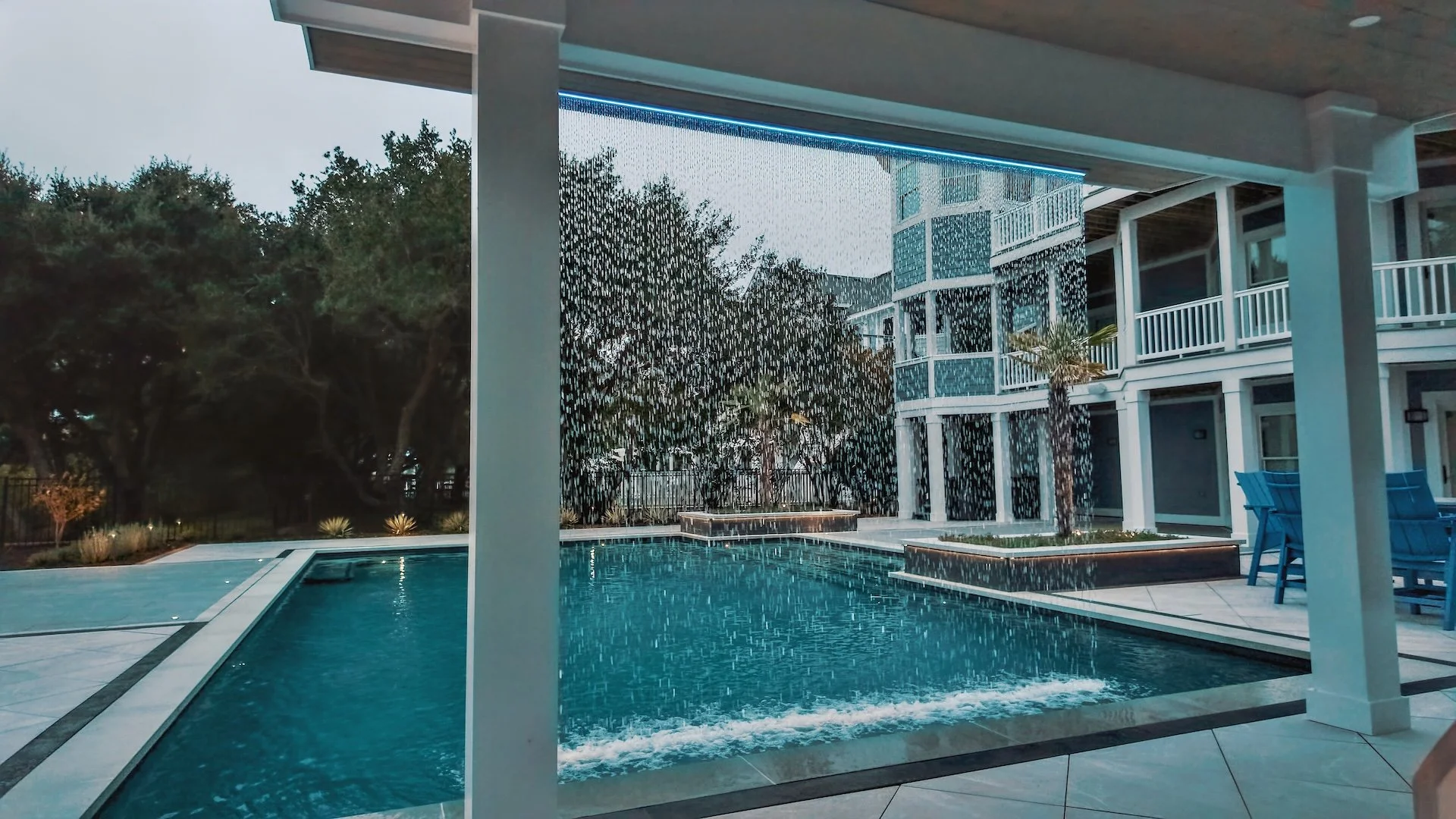
How a Water Feature Contractor Adds Sound and Movement to a Coastal Landscape That Already Has Both
The coast provides its own soundtrack. The wind through the sea oats. The distant surf. The afternoon rain on the roof. But the backyard, despite sitting minutes from the ocean, can feel surprisingly quiet and still. The patio is a static surface. The plantings are visual but silent. And the outdoor living space, which looks complete, is missing the element that gives a garden its pulse.
A water feature contractor in Barco, NC adds that element. The sound of water moving over stone. The shimmer of light on a surface that is never the same from one moment to the next. The sense of movement in a landscape that would otherwise be still. A well designed water feature transforms the experience of the outdoor space in a way that no hardscape element or planting can replicate.
The coast provides its own soundtrack. The wind through the sea oats. The distant surf. The afternoon rain on the roof. But the backyard, despite sitting minutes from the ocean, can feel surprisingly quiet and still. The patio is a static surface. The plantings are visual but silent. And the outdoor living space, which looks complete, is missing the element that gives a garden its pulse.
A water feature contractor in Barco, NC, adds that element. The sound of water moving over stone. The shimmer of light on a surface that is never the same from one moment to the next. The sense of movement in a landscape that would otherwise be still. A well designed water feature transforms the experience of the outdoor space in a way that no hardscape element or planting can replicate.
What a Water Feature Contractor Should Design For on the Coast
A water feature on a coastal property faces conditions that inland features do not. The salt air. The wind that accelerates evaporation and carries spray beyond the intended basin. The sandy soil that drains fast and complicates the liner and the basin engineering. And the storm events that add volume to the system faster than the overflow can handle if it was not designed for the climate.
A water feature contractor building for the coast should address:
A recirculating system sized for the wind conditions, because a fountain or a waterfall that loses water to wind drift on an exposed coastal lot will run the basin dry between refills
A liner and basin construction that accounts for the sandy substrate, which shifts more readily than clay and can compromise an improperly supported basin over time
Pump and plumbing materials rated for the salt air environment, because standard components corrode faster on the coast than inland
An overflow system that handles the storm events this region delivers without flooding the surrounding landscape or overwhelming the pump
Placement that positions the water feature where the sound reaches the primary gathering areas, the seating, the patio, and the entry points where the homeowner and the guests will experience it most
These are site specific decisions. A water feature contractor who has built on the coast understands the conditions that shape them.
What Types of Water Features Work on Coastal Properties
The range of water features available includes everything from a simple bubbling boulder to a full waterfall and stream system. The selection depends on the property, the budget, and the effect the homeowner wants to create.
A disappearing fountain, where water emerges from a stone or a vessel and recirculates through a hidden basin, delivers sound and movement with minimal maintenance and a small footprint. A waterfall constructed from natural stone creates a more dramatic focal point and produces a fuller, richer sound. A formal fountain with a visible basin adds a classical or contemporary design element depending on the style. And a stream that connects two areas of the landscape introduces movement along a path rather than concentrating it at a single point.
The Feature That Changes How the Space Feels
The outdoor living space before the water feature is complete. The one after it is alive. The sound fills the gaps the hardscape left. The movement draws the eye. And the homeowner, sitting on the patio in the evening listening to water move over stone, is experiencing the backyard in a way they did not before. If your property in Currituck County, the Outer Banks, or the surrounding area is missing that quality, a water feature contractor is who provides it.

How a Pergola Builder Creates Shade That Stands Up to Coastal Conditions in Currituck County, NC
The sun on the Outer Banks is generous. By 10 am in July, it has made the exposed patio uncomfortable. By noon, it has made it unusable. And the homeowner who built the patio, the outdoor kitchen, and the fire pit without planning for overhead shade discovers that the investment works great in the morning and the evening but sits empty during the six hours in between.
A pergola is what solves that problem. It creates filtered or full shade over the gathering space, defines the outdoor room architecturally, and gives the patio a ceiling that supports fans, lights, and speakers. A pergola builder who works on the coast designs the structure to do all of that while surviving the wind loads, the salt exposure, and the UV intensity that coastal North Carolina delivers.
The sun on the Outer Banks is generous. By 10 am in July, it has made the exposed patio uncomfortable. By noon, it has made it unusable. And the homeowner who built the patio, the outdoor kitchen, and the fire pit without planning for overhead shade discovers that the investment works great in the morning and the evening but sits empty during the six hours in between.
A pergola is what solves that problem. It creates filtered or full shade over the gathering space, defines the outdoor room architecturally, and gives the patio a ceiling that supports fans, lights, and speakers. A pergola builder who works on the coast designs the structure to do all of that while surviving the wind loads, the salt exposure, and the UV intensity that coastal North Carolina delivers.
What a Pergola Builder Needs to Account for on the Coast
A pergola inland is a shade structure. A pergola on the coast is an engineered structure that has to handle conditions most inland builds never face.
The build considerations include:
Wind load engineering that meets the coastal building code requirements for Currituck County and the Outer Banks, where design wind speeds are significantly higher than inland jurisdictions
Material selection that resists the corrosion, the UV degradation, and the moisture exposure that the salt air accelerates on every surface
Footing depth and anchoring that prevent uplift during high wind events, because a pergola that is not properly anchored is a liability in a tropical storm
Hardware and fastener specification using stainless steel or hot dipped galvanized connectors that resist the corrosion standard hardware shows within a single season in this environment
Integration with the patio surface and the surrounding landscape so the pergola reads as part of the outdoor living space rather than a structure placed on top of it
These are not overbuilding. They are building to the standard the location demands.
How Material Selection Shapes the Experience
Aluminum pergolas offer the lowest maintenance profile and the strongest resistance to corrosion. They are available in a range of profiles and finishes, including options with adjustable louvers that allow the homeowner to control the amount of light and airflow.
Wood pergolas, particularly pressure-treated or naturally durable species like cedar, deliver a warmth and character that metal structures cannot replicate. The trade-off is a maintenance cycle that includes periodic sealing or staining to protect the wood from the UV and moisture exposure that the coast delivers year-round.
Vinyl and composite materials split the difference, offering low maintenance with a range of aesthetic options. The structural capacity varies by product, and the pergola builder should specify materials rated for the wind loads and the span requirements of the design.
The Room That Has No Walls
A well-built pergola turns the patio from a surface into a space. The shade makes it usable at 2 pm. The fan makes it comfortable in the humidity. The lights extend it into the evening. And the structure gives the outdoor area a sense of enclosure that open-air patios lack. If your patio has been losing the family to the air conditioning every afternoon, a pergola builder in Barco, NC, and surrounding areas who understands the coastal conditions can show you what the right structure would do for the space.

How a Drainage Contractor Solves Water Problems When the Land Is Flat, and Water Has Nowhere to Go
Inland properties have a grade. The water flows downhill, and the drainage contractor's job is to direct it. Coastal properties in Currituck County and the Outer Banks region often have something close to zero grade. The land is flat. The water table sits just below the surface. And after a heavy rain, the water does not flow anywhere. It sits. In the yard. Against the foundation. On the patio. In the planting beds. Everywhere it should not be.
A drainage contractor who works in this environment understands that the solutions look different here. There is no slope to exploit. The discharge options are limited. And the sandy soil that drains quickly on the surface can become saturated at depth when the water table rises during storm season.
Inland properties have a grade. The water flows downhill, and the drainage contractor's job is to direct it. Coastal properties in Currituck County and the Outer Banks region often have something close to zero grade. The land is flat. The water table sits just below the surface. And after a heavy rain, the water does not flow anywhere. It sits. In the yard. Against the foundation. On the patio. In the planting beds. Everywhere it should not be.
A drainage contractor who works in this environment understands that the solutions look different here. There is no slope to exploit. The discharge options are limited. And the sandy soil that drains quickly on the surface can become saturated at depth when the water table rises during storm season.
What a Drainage Contractor Evaluates on a Coastal Property
The first step is understanding where the water is coming from and why it is not leaving. On flat, coastal lots, the answer is usually a combination of surface runoff that has no grade to follow and a water table that rises during wet periods and prevents subsurface drainage from functioning.
A drainage contractor evaluating a coastal property looks at:
The existing grade around the house, the patio, and the landscape features to determine whether the surfaces are directing water toward or away from the structures
The water table depth, which on many properties in this region sits close enough to the surface that traditional French drains cannot discharge effectively during saturated conditions
The soil composition and percolation rate, because sandy soil drains fast on the surface but can become a bathtub when the underlying water table eliminates the path for water to move through
The location of any hardscape, pool equipment, septic systems, or other infrastructure that constrains where drainage solutions can be routed
The discharge point, which on flat lots may require a sump pump, a dry well, or a connection to a stormwater system rather than a simple gravity outlet
These evaluations determine the scope. A surface grading correction is a different project than a French drain network, which is a different project than a pump-assisted system. The right solution depends on the site.
Why Experience on the Coast Matters
A drainage contractor in Barco, NC who learned the trade on properties with grade and clay soil will approach a flat, sandy, high water table lot with assumptions that do not apply. The solutions that work inland, gravity fed pipes to a low point, may not function here when the low point is already saturated.
The contractors who have solved drainage problems on dozens of coastal properties understand the limitations and the workarounds. They know when a sump is required. They know how to design a system that handles the volume without overwhelming the discharge. And they know how to integrate the drainage with the existing landscape so the solution does not create new problems.
The Yard That Stays Dry When It Rains
Water problems on the coast are not going to resolve themselves. The land is flat. The water table is high. And every storm delivers a test. A drainage contractor who understands coastal conditions can walk the property and tell you exactly where the water is going, why it is getting stuck, and what it takes to move it. That conversation is worth having before the next storm arrives.

How an Outdoor Kitchen Contractor Builds for a Climate That Corrodes and Tests Everything
The outdoor kitchen that works beautifully in a sheltered suburban backyard in Raleigh may not survive its third summer on the Outer Banks. The salt air reaches every surface. The humidity sits on every material. The storms drive rain sideways into cabinets, connections, and equipment housings that were never designed for coastal exposure. And the UV at the coast accelerates the fading, the cracking, and the degradation that milder environments take years to produce.
An outdoor kitchen contractor who builds on the coast understands that the material specifications, the appliance selections, the electrical and plumbing decisions, and the structural design all need to be calibrated for conditions that are harsher than anywhere inland. The kitchen that performs here is the one that was built by someone who knew what the coast would do to it.
The outdoor kitchen that works beautifully in a sheltered suburban backyard in Raleigh may not survive its third summer on the Outer Banks. The salt air reaches every surface. The humidity sits on every material. The storms drive rain sideways into cabinets, connections, and equipment housings that were never designed for coastal exposure. And the UV at the coast accelerates the fading, the cracking, and the degradation that milder environments take years to produce.
An outdoor kitchen contractor who builds on the coast understands that the material specifications, the appliance selections, the electrical and plumbing decisions, and the structural design all need to be calibrated for conditions that are harsher than anywhere inland. The kitchen that performs here is the one that was built by someone who knew what the coast would do to it.
What the Coastal Climate Does to an Outdoor Kitchen
Salt air is the primary aggressor. It corrodes stainless steel that is not marine grade. It attacks hardware, fasteners, and connections that were specified for inland use. It accelerates the breakdown of painted surfaces, sealed joints, and adhesive bonds. And it does all of this continuously, not just during storms but every day the kitchen sits exposed to the ocean breeze.
An outdoor kitchen contractor building for this environment should specify:
Marine grade 316 stainless steel for all appliances, cabinetry frames, and hardware, because standard 304 grade stainless will show corrosion within one to two years in a salt air environment
Cabinetry constructed from marine grade polymer, stainless steel, or sealed concrete rather than wood, which will warp, swell, and deteriorate regardless of the finish applied to it
Countertop materials that resist both UV degradation and moisture absorption, including granite, porcelain slab, and sealed concrete, each of which handles the exposure without the maintenance demands that natural stone with an untreated surface would require
Electrical connections with weather rated, GFCI protected outlets and conduit sealed against moisture intrusion, because the combination of salt air and persistent humidity creates conditions where standard electrical components fail prematurely
Plumbing with corrosion resistant fittings and a winterization plan that protects the lines from the occasional hard freezes that reach the Outer Banks and Currituck County during winter
These specifications are not upgrades. They are the minimum for an outdoor kitchen that performs on the coast. The contractor who does not specify them is building a kitchen that will require early replacement of the components that fail.
Why the Contractor Matters More Than the Appliance Brand
The homeowner who buys a premium grill and hires an unqualified contractor to install it ends up with a great grill in a failing kitchen. The cabinetry corrodes. The counter stains. The electrical shorts. And the grill, which was the most expensive component, sits in a structure that is falling apart around it.
The outdoor kitchen contractor who has built on the coast knows what fails, what holds up, and what the homeowner will thank them for specifying five years from now when everything still works.
The Kitchen That Handles the Coast
A coastal outdoor kitchen should still look and function like it did the day it was finished three summers later. The grill fires on the first try. The cabinetry doors close smoothly. The counter is clean. And the evening cookout happens the way it was supposed to, without a single component reminding the homeowner that the coast is hard on things built outdoors.
That durability starts with the contractor. Choose the one who builds for where the kitchen lives, not where the catalog was printed.

How to Choose a Patio Company That Understands What the Coast Demands From Every Outdoor Surface
Three patio companies quote the job. The square footage is the same. The paver brand is the same. The prices are within range of each other. And the homeowner, standing in the driveway with three proposals that look roughly identical on paper, has no idea that the differences between them are buried in the details that will determine whether the patio lasts five years or twenty.
Choosing a patio company is not a price comparison. It is a capability evaluation. And on the coast, where the sandy substrate, the salt exposure, the moisture conditions, and the storm activity create demands that inland patios never face, the capability gap between companies is wider than the price gap suggests.
Three patio companies quote the job. The square footage is the same. The paver brand is the same. The prices are within range of each other. And the homeowner, standing in the driveway with three proposals that look roughly identical on paper, has no idea that the differences between them are buried in the details that will determine whether the patio lasts five years or twenty.
Choosing a patio company is not a price comparison. It is a capability evaluation. And on the coast, where the sandy substrate, the salt exposure, the moisture conditions, and the storm activity create demands that inland patios never face, the capability gap between companies is wider than the price gap suggests.
What Separates a Coastal Patio Company From an Inland One
The patio company that has built exclusively on red clay and loam in the Piedmont brings assumptions to the coast that do not apply. The base preparation is different. The drainage is different. The joint material needs to perform in different conditions. And the substrate beneath the aggregate does not behave the way inland soils do.
A patio company qualified for coastal work should demonstrate:
Experience building on sandy substrates that require geotextile fabric, deeper aggregate bases, and compaction methods calibrated for soil that does not hold density the way clay does
An understanding of the drainage challenges on flat, low lying coastal lots where the water table limits subsurface percolation and the grade offers little help moving water off the surface
Material knowledge that accounts for salt air exposure, UV intensity at the coast, and the surface temperature considerations that affect barefoot comfort on a pool deck or a sun exposed patio
A design approach that integrates the patio with the surrounding outdoor living features, including the pool, the outdoor kitchen, the fire pit, and the plantings, rather than treating the patio as a standalone surface
Familiarity with the local building codes and permit requirements, which in coastal jurisdictions often include setback, elevation, and flood zone considerations that inland permits do not
These are not premium qualifications. They are the baseline for a patio company working in this environment.
Why the Conversation Reveals the Capability
The quote tells you the price. The conversation tells you whether the company understands the conditions. A patio company that asks about the water table, the proximity to the coast, the intended use of the space, and the features that will sit on or adjacent to the patio is a company thinking about the project as a system. A company that measures the area, names a paver, and sends a number is selling a surface.
The question to ask is simple: what is different about building a patio on the coast? The company that has a detailed, specific answer has done the work. The company that pauses has not.
The Patio That Was Built by Someone Who Knew the Address
The coast rewards the companies that respect it and punishes the ones that underestimate it. A patio company with coastal experience builds surfaces that stay level through storm seasons, drain correctly on flat lots, and look the way they did on installation day years later. If you are planning a patio in Maple, Moyock, Southern Shores, or the surrounding area, the company that knows the coast before they see your property is the one worth hiring.

How Patio Installation on the Coast Requires a Different Build Than Anywhere Inland
The soil is sand. The air carries salt. The storms come off the Atlantic with wind and rain that test every outdoor surface on the property. And the patio that looked great on installation day has to keep looking great through all of it, year after year, without settling into the substrate or losing its interlock in the first hurricane season.
Patio installation in Barco, NC, and across Currituck County, Outer Banks, and Southeastern Virginia area is a coastal build. The materials, the base, and the drainage all need to account for conditions that inland properties never face. The homeowners who understand that distinction end up with patios that perform. The ones who hire for the lowest bid end up with pavers shifting in the sand by year two.
The soil is sand. The air carries salt. The storms come off the Atlantic with wind and rain that test every outdoor surface on the property. And the patio that looked great on installation day has to keep looking great through all of it, year after year, without settling into the substrate or losing its interlock in the first hurricane season.
Patio installation in Barco, NC, and across Currituck County, Outer Banks, and Southeastern Virginia area is a coastal build. The materials, the base, and the drainage all need to account for conditions that inland properties never face. The homeowners who understand that distinction end up with patios that perform. The ones who hire for the lowest bid end up with pavers shifting in the sand by year two.
What Coastal Conditions Demand From the Build
Sandy soil drains fast, which sounds like an advantage until you realize it also compacts poorly and provides very little lateral support for the paver system. A patio installed on sand without a proper aggregate base will settle unevenly as the substrate shifts beneath it.
A patio installation built for the coast requires:
A compacted aggregate base that provides the structural stability the sand alone cannot deliver, installed in lifts and compacted at each stage
Geotextile fabric between the native sand and the aggregate to prevent migration that would compromise the base over time
Polymeric sand in the joints to resist washout from the heavy rains and the wind driven moisture that coastal storms deliver
Edge restraint that holds the perimeter tight against the lateral movement that soft surrounding soil allows
Drainage grading that moves water off the surface and away from the house, accounting for the flat topography and the high water table common in this region
These are not upgrades. They are what makes the patio function on the coast rather than just sitting on it temporarily.
How the Patio Connects to the Outdoor Living Space
A patio is the foundation. What sits on it determines how the space gets used. The outdoor kitchen. The fire pit. The pergola or pavilion that provides shade from the coastal sun. The furniture that defines the zones. The lighting that extends the evening.
The most successful patio installations are the ones where the patio was designed alongside everything else, not built first and furnished later. The layout accounts for the cooking zone, the dining area, the lounging space, and the circulation between them. The material coordinates with the pool deck, the walkways, and any vertical structures. And the proportions feel right for the house and the lot.
The Surface That Handles the Season
A patio on the Outer Banks or in Currituck County is not seasonal decoration. It is the surface that hosts every cookout, every family gathering, every evening by the fire pit, and every morning coffee from spring through fall. It sits through the nor'easters in winter. It handles the salt, the sand, and the storms. And if it was built right, it comes out the other side of every season looking the way it did on day one. If you are planning a patio for your property in Maple, Moyock, Southern Shores, or the surrounding area, the build conversation should start with the conditions. The design follows from there.