Water Feature Contractor in Barco, NC: What Site Conditions Decide Before Design
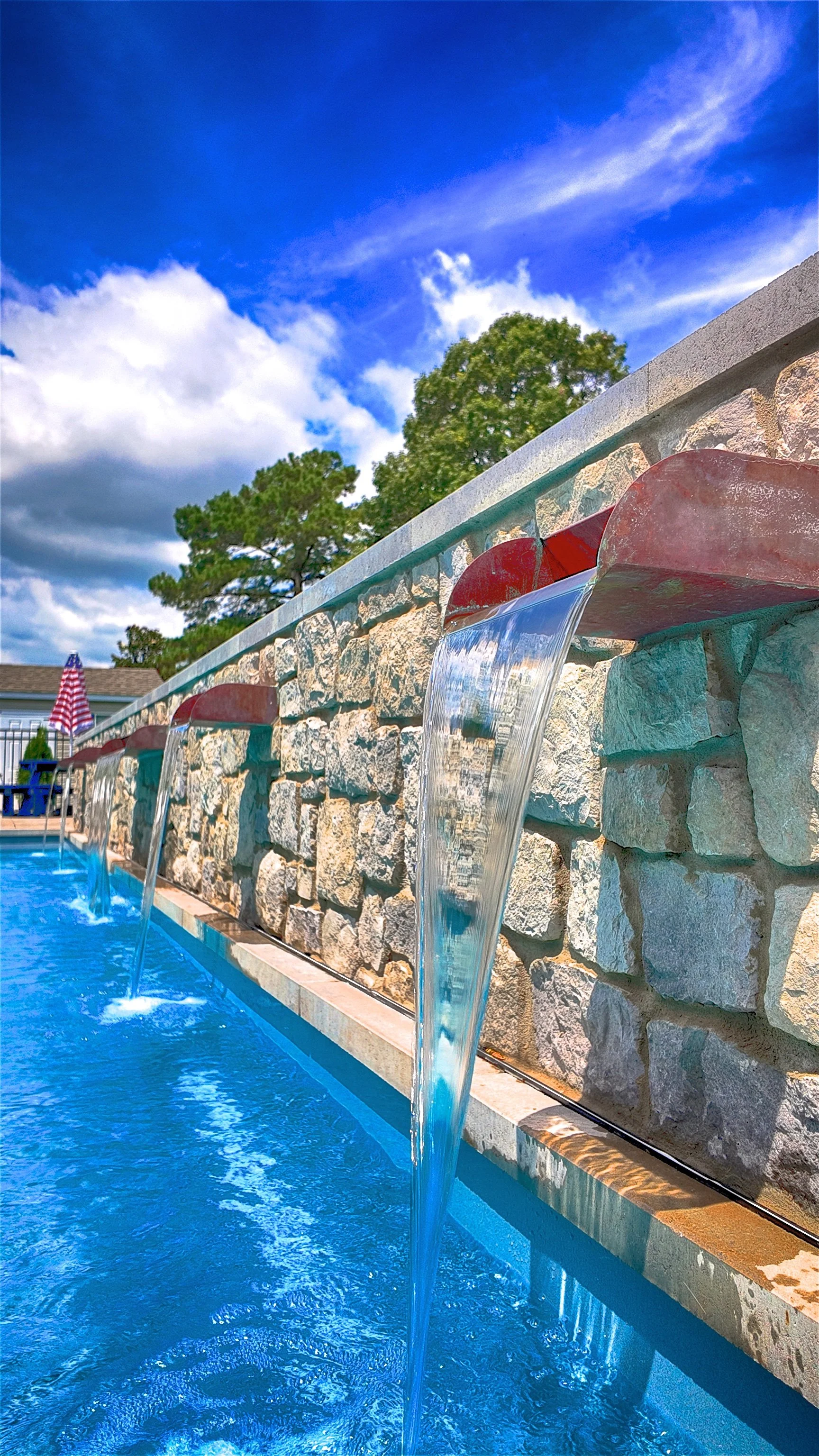
Currituck County soil decides more about a water feature than any catalogue does. A water feature contractor in Barco, NC works on flat ground with water close to the surface, soils that vary widely in drainage, and a shoreline the state regulates.
Our team reads those conditions before drawing a basin, because the excavation and the footing are where a backyard waterfall either holds or cracks.
Evolve Design Build works across Northeast North Carolina and Southeastern Virginia. Jordan holds numerous ICPI certifications and is a licensed landscape contractor and swimming pool contractor, and Kyle holds a Class A construction license along with NCMA and ICPI certifications. Water features sit inside that licensed scope rather than beside it.
How Does a High Water Table Change Where a Basin Goes?
Flat ground with water close to the surface limits how deep a basin sits and how it behaves in a wet season. Our team sets basin elevation against the seasonal high water mark rather than against finish grade, then designs the overflow so a heavy rain does not push the feature out of level.
On a lot that sheds nowhere, that single decision governs the whole layout. Custom water feature design here starts with elevations and moves to stone selection second.
Do Currituck County Soils Require a Footing Test Before Excavation?
Currituck County's building department notes that county soils range across very poorly drained series such as Cape Fear and well-drained series such as Conetoe, and that shrink-swell soils occur in places.
Where a soil is mapped as unsuitable, a soil test is required at permit issuance and the footing is not inspected until that report arrives.
A spillway wall or a raised basin is a footed structure, so the test belongs in the project schedule rather than in a surprise week.
Does a Water Feature Near the Shoreline Need a CAMA Permit?
Development within 75 feet of the normal water line of an estuarine shoreline, or within 30 feet along public trust shorelines including Hog Quarter Creek, Tulls Creek and the Northwest River, sits in an Area of Environmental Concern and requires a CAMA permit.
The state definition of development explicitly includes excavation, dredging, filling and the removal of clay, silt, sand or gravel, which is precisely what digging a pond basin involves. Waterfront clients get that determination before design.
Is a Spillway Wall Practical on a Patio That Is Already Built?
On most sites it is. A sheer-descent spillway set into a freestanding wall, or a scupper run added to an existing pool wall, is the retrofit that works with the least demolition.
The real constraints are plumbing routing under finished paving, an electrical supply that meets code near water, and enough wall mass to carry the load. Our full outdoor living design process maps those runs against what is already built, so the finished feature reads as original rather than added.
Where Do the Pump and Vault Access Belong?
Equipment placement is the decision homeowners notice last and live with longest. A pump, filter and valve set needs dry access, service clearance and a route that keeps noise away from seating.
Where a feature shares equipment with a pool, we size the vault for both and label the valves, so a service visit does not turn into a diagnostic exercise. Salt air shortens the life of exposed metal, and we specify housings and fasteners for that exposure.
Homeowners with an existing pool usually want one point of shutoff for the whole system, and we set that up during rough-in rather than retrofitting it later.
Start Your Water Feature With a Site Visit
The design that lasts is the one that started with elevations, soils and setbacks. Evolve Design
Build designs and builds water features across Barco and the surrounding coastal counties, handling the excavation, the footing and the equipment as one scope. Schedule a site visit to review what your lot allows.
In Summary
How much maintenance does a backyard waterfall need in salt air?
A recirculating feature needs water level checks, periodic basin cleaning and an annual look at the pump and seals. Salt-laden air accelerates corrosion on exposed hardware, so we specify materials for that exposure and set a service interval at handover.
Do you build water features outside Currituck County?
Our service area covers Northeast North Carolina and Southeastern Virginia, including Moyock, Currituck, Chesapeake and the Outer Banks. The same site logic applies across the region, since the soils and the shoreline rules travel with the geography.
Can a water feature run on the same equipment as a pool?
Sharing a pad is common and usually the better decision, provided the vault is sized for both and the valves are labeled at rough-in. What causes trouble later is a feature added to a pool system that was never sized for the extra flow.
How long does a water feature project take?
A spillway or scupper retrofit on finished paving runs on a short calendar once plumbing and electrical routes are resolved. A pond basin with a footed spillway wall carries excavation, soil testing where required and footing inspection, which puts the schedule on the permit rather than the crew.
Does a water feature need a CAMA permit on every waterfront lot?
The determination depends on distance from the normal water line and the shoreline classification, not on the size of the feature. Any excavation inside an Area of Environmental Concern falls under the state definition of development, so the answer comes from a determination before design rather than an assumption.